

Description
The Reishi mushrooms contribute to the natural defenses of the organism and the healthy functioning of the circulatory system.
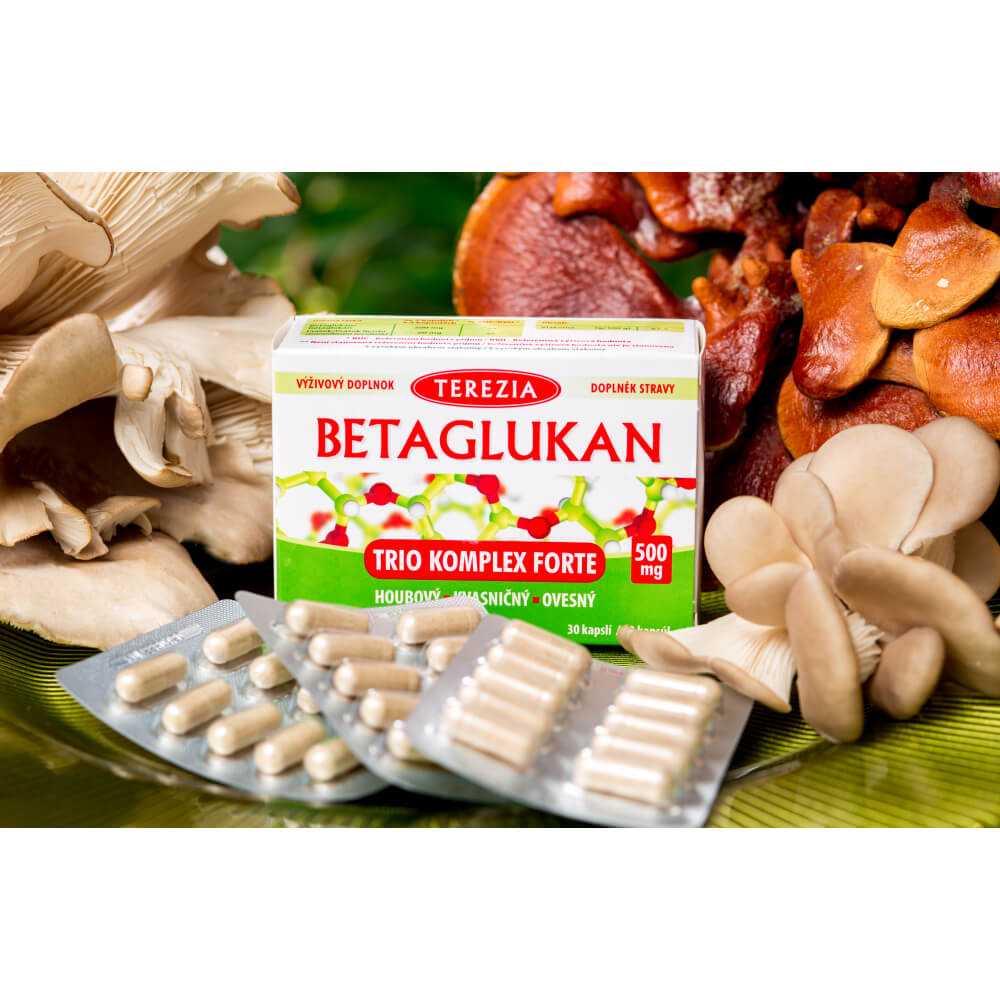
The complex of different sources of beta-glucans by its synergic effect enables wider utilization and increased efficiency of the entire product.
Beta-glucans reduce the risk of cardiovascular disease. Beta-glucan has shown significant antimicrobial (stops the growth of microorganisms), anticancer, anti-diabetic, and anti-hypercholesterolemic (controls cholesterol levels) properties in countless clinical trials.
Beta-glucans are most commonly used for heart disease and high cholesterol. They are also used for many other conditions, such as eczema and diabetes, but there is no good scientific evidence to support most of these other uses.
Beta-glucan (β-glucan) is a soluble fiber readily available from oat and barley grains that has been gaining interest due to its multiple functional and bioactive properties. Its beneficial role in insulin resistance, dyslipidemia, hypertension, and obesity is being continuously documented.
Beta-glucans also show anticarcinogenic activity. They can prevent oncogenesis due to the protective effect against potent genotoxic carcinogens. As an immunostimulating agent, which acts through the activation of macrophages and NK cell cytotoxicity, beta-glucan can inhibit tumor growth in the promotion stage too.
Beta-glucans are naturally occurring polysaccharides. These glucose polymers are constituents of the cell wall of certain pathogenic bacteria and fungi. The healing and immunostimulating properties of mushrooms have been known for thousands of years in Eastern countries. These mushrooms contain biologically active polysaccharides that mostly belong to a group of beta-glucans.
These substances increase host immune defense by activating the complement system, enhancing macrophages and natural killer cell function.
The induction of cellular responses by mushrooms and other beta-glucans is likely to involve their specific interaction with several cell surface receptors, such as complement receptor 3 (CR3; CD11b/CD18), lactosylceramide, selected scavenger receptors, and dectin-1 (betaGR).
Anti-angiogenesis can be one of the pathways through which beta-glucans can reduce tumor proliferation, and prevent tumor metastasis.
Beta-Glucan as an adjuvant to cancer chemotherapy and radiotherapy demonstrated a positive role in the restoration of hematopoiesis followed by bone marrow injury.
Immunotherapy using monoclonal antibodies is a novel strategy for cancer treatment. These antibodies activate the complement system and opsonize tumor cells with the iC3b fragment.
In contrast to microorganisms, tumor cells, as well as other host cells, lack beta-glucan as a surface component and cannot trigger complement receptor 3-dependent cellular cytotoxicity and initiate tumor-killing activity. This mechanism could be induced in the presence of beta-glucans.
*Source: PubMed – National Library of Medicine, 2007, 43(8):597-606.